

How AI Is Changing GIS Forever - From Mapping to Decision Making
Geographic Information Systems (GIS) have long been essential tools for mapping, spatial analysis, and understanding the world around us. However, a powerful transformation is underway. How AI Is Changing GIS Forever: From Mapping to Decision-Making is no longer a futuristic idea—it’s happening right now. Artificial Intelligence (AI) is redefining how geospatial data is collected, processed, analyzed, and ultimately used to make smarter, faster decisions.
This article explores how AI is reshaping GIS from its traditional roots in mapping into an intelligent decision-making engine that supports governments, businesses, scientists, and communities worldwide.
Understanding the Evolution of GIS in the Age of AI
GIS began as a digital mapping tool, allowing users to store and visualize geographic data. Over time, it evolved to support spatial analysis, modeling, and complex geodatabases. Yet, traditional GIS workflows often required heavy manual input, expert knowledge, and time-consuming processes.
AI introduces automation, pattern recognition, and predictive intelligence into GIS. Instead of simply displaying data, modern GIS platforms can now learn from data, identify hidden relationships, and recommend actions. This shift marks a fundamental change in how spatial information is used.
How AI Enhances Mapping Accuracy and Speed
One of the most visible ways How AI Is Changing GIS Forever: From Mapping to Decision-Making is through automated mapping.
Automated Feature Extraction
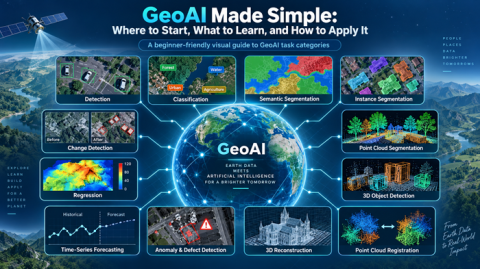
AI-powered computer vision can automatically detect roads, buildings, water bodies, and vegetation from satellite and drone imagery. Tasks that once took weeks can now be completed in hours with greater consistency.
Improved Image Classification
Machine learning models classify land use and land cover with remarkable accuracy. Urban growth, deforestation, and agricultural patterns are identified faster, enabling real-time monitoring.
Real-Time Data Integration
AI allows GIS systems to ingest live data streams from sensors, IoT devices, and satellites, keeping maps constantly updated without manual intervention.
Machine Learning and Spatial Pattern Recognition
Traditional GIS analysis depends on predefined rules. AI, however, learns directly from data.
Identifying Hidden Spatial Patterns
Machine learning algorithms can uncover trends humans might miss, such as subtle environmental changes or emerging traffic congestion patterns.
Predictive Spatial Modeling
AI-driven GIS can forecast future events, including flood risks, disease spread, or urban expansion. These predictive models help planners act before problems escalate.
Adaptive Learning Systems
As new data becomes available, AI models improve automatically, making GIS systems smarter over time.
From Maps to Decisions: AI-Driven GIS Intelligence
The biggest shift in How AI Is Changing GIS Forever: From Mapping to Decision-Making is the move from visualization to actionable intelligence.
Decision Support Systems
AI-powered GIS platforms don’t just show data—they suggest optimal actions. For example, city planners can receive recommendations on where to build infrastructure based on population trends and environmental impact.
Scenario Simulation
AI enables GIS to simulate multiple “what-if” scenarios, helping decision-makers compare outcomes before committing resources.
Risk Assessment and Management
From disaster response to insurance planning, AI-enhanced GIS evaluates risks with higher precision, supporting faster and more confident decisions.
Industry Applications Transforming with AI-Powered GIS
Urban Planning and Smart Cities
Cities use AI-driven GIS to optimize traffic flow, energy use, and public services. Platforms like Esri support AI integration for smart city initiatives worldwide.
Environmental Monitoring
AI helps scientists track climate change, wildlife habitats, and pollution patterns with continuous geospatial monitoring.
Healthcare and Public Safety
GIS combined with AI predicts disease outbreaks, plans emergency response routes, and improves resource allocation during crises.
Agriculture and Land Management
Precision farming uses AI-powered GIS to analyze soil health, crop yield, and irrigation needs, boosting productivity while reducing waste.
Challenges and Ethical Considerations
Despite its benefits, AI in GIS brings challenges.
-
Data Quality Issues: AI models are only as good as the data they learn from.
-
Bias and Fairness: Poorly trained models can reinforce spatial or social biases.
-
Privacy Concerns: Location data is sensitive and must be handled responsibly.
-
Skill Gaps: Organizations need professionals trained in both GIS and AI.
Addressing these issues is essential to ensure ethical and sustainable adoption.
The Future of GIS in an AI-Driven World
The future points toward fully autonomous GIS systems capable of self-updating, self-analyzing, and self-recommending. As AI becomes more explainable and transparent, trust in AI-driven GIS decisions will grow.
Cloud computing, edge AI, and advanced spatial analytics will further accelerate innovation, making GIS accessible to more users across the globe.
Frequently Asked Questions (FAQs)
1. How is AI different from traditional GIS analysis?
AI learns from data and adapts over time, while traditional GIS relies on fixed rules and manual processes.
2. Can AI-powered GIS replace human analysts?
No. AI enhances human expertise by automating tasks and providing insights, but human judgment remains essential.
3. Is AI in GIS expensive to implement?
Costs vary, but cloud-based solutions are making AI-powered GIS more affordable than ever.
4. What skills are needed to work with AI in GIS?
Knowledge of GIS fundamentals, data science, and basic machine learning is increasingly valuable.
5. How reliable are AI-based GIS predictions?
When trained on high-quality data, AI predictions can be highly accurate, though uncertainty should always be considered.
6. Where can I learn more about modern GIS technologies?
You can explore authoritative resources from organizations like the United Nations or leading GIS vendors, as well as educational platforms such as https://www.esri.com.

Comments
No comments yet. Start the discussion.
Leave a reply
Your email address will not be published. Required fields are marked.